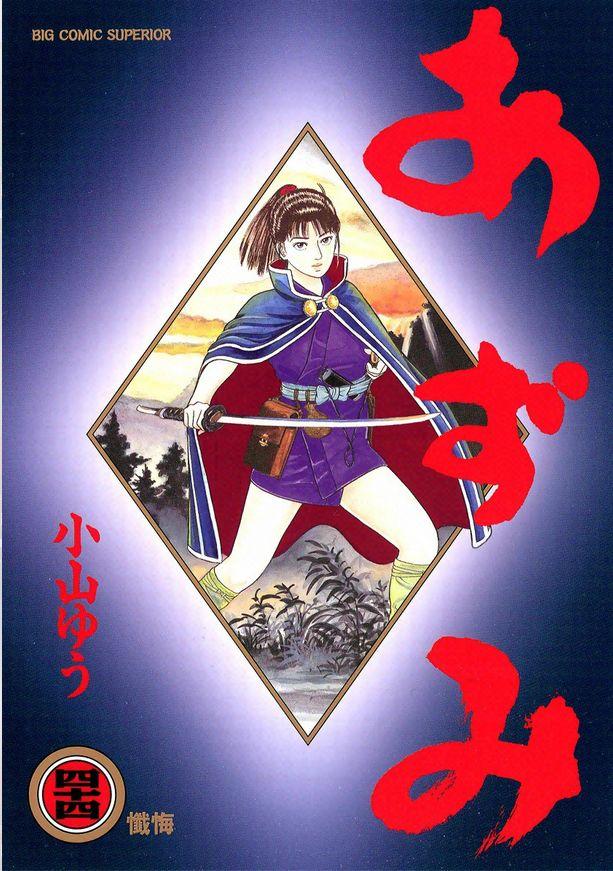
Azumi (あずみ), 1994-2008, , Big Comic Superior
Warning for (a lot of) rape and murder.
STORY: 8
Meet Azumi, a child soldier raised to become the deadliest assassin of medieval Japan. Follow her along dangerous missions as she murders literally dozens (if not hundreds) of people who could upset the stability of the Tokugawa shogunate. The subject is a classic, but the result is an intense sword manga with thrilling fight scenes, historical political intrigue, and many great characters. And it’s very good at that!
ART: 8
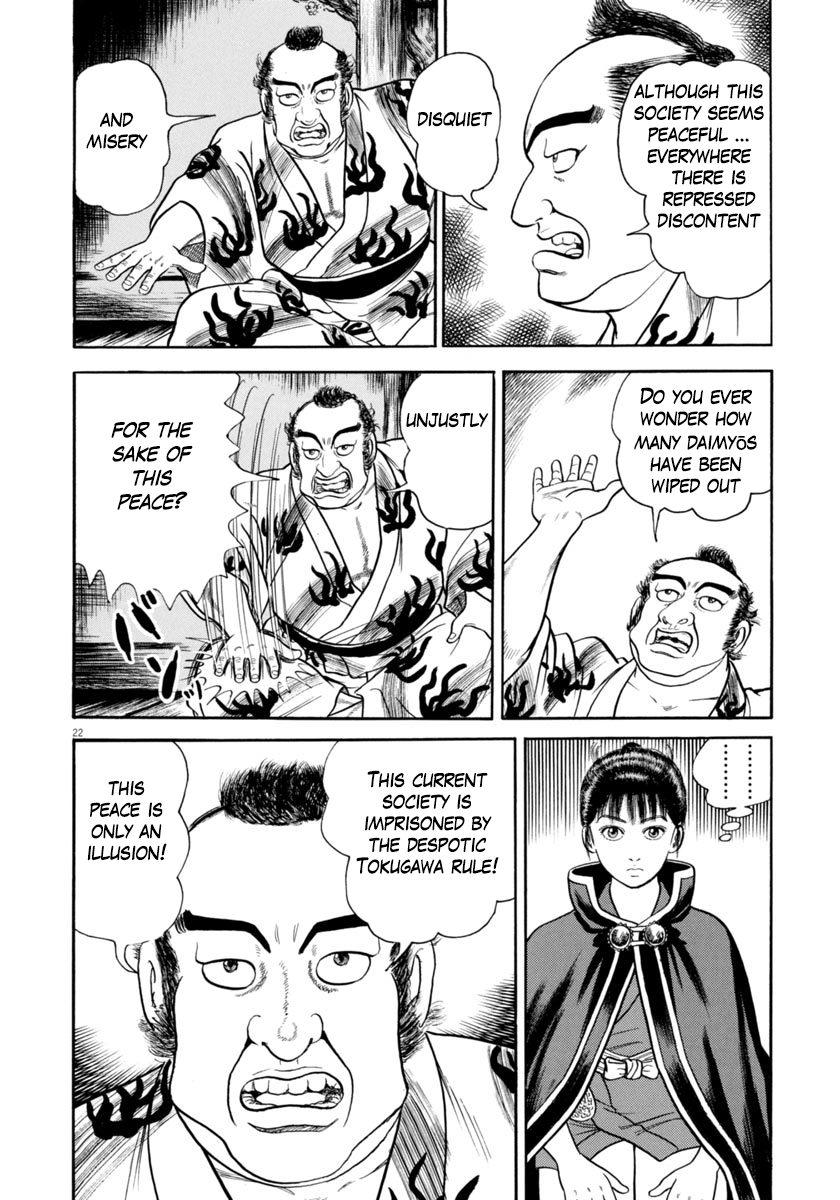
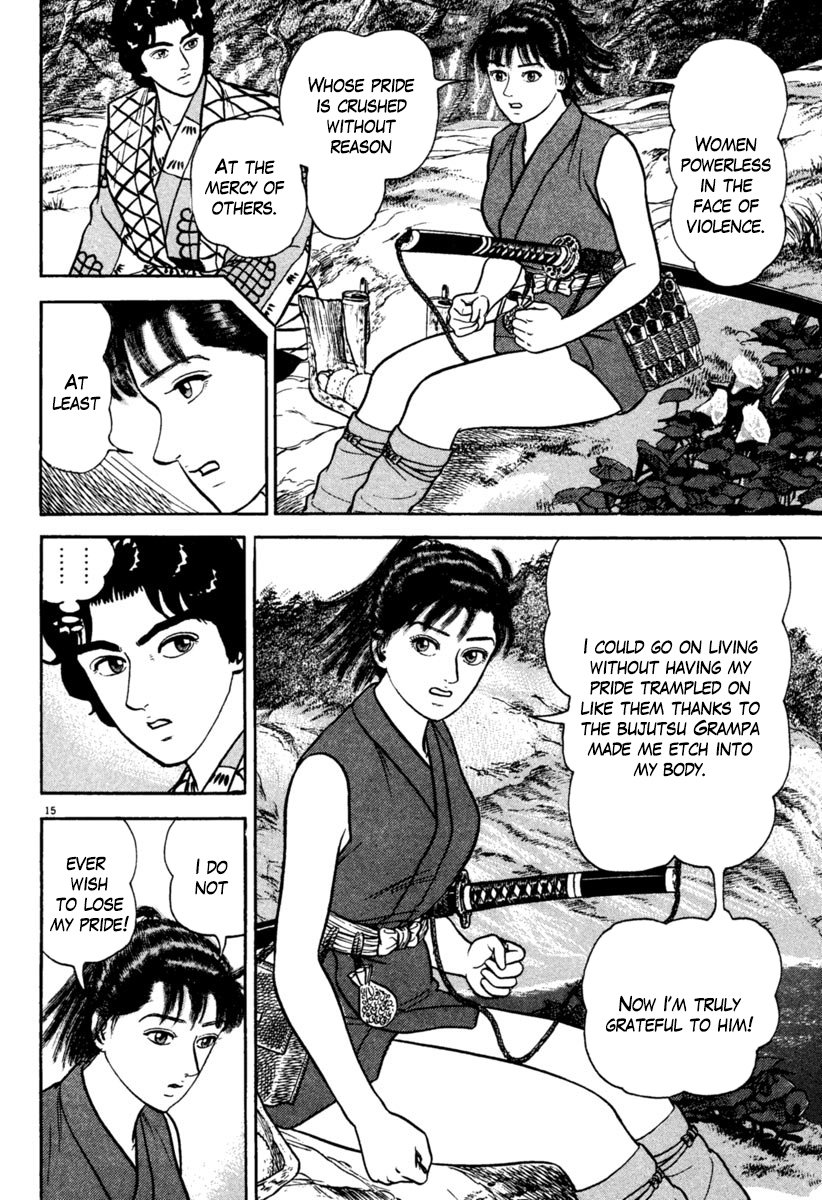
The panels are not pretentious, and you could think you are looking at an old comedy or kid’s comic at first glance. But the author use of motion, framing, composition and anatomy, are actually mastery behind modesty, and they are extremely efficient at carrying the story, to a degree that few titles can achieve. With its old-school, almost cartoonist faces, the manga has no problems creating tons of memorable friends and foes. The art also shines like a fresh blade when it comes to render the many battles, and the different shades of pain that come with it. Interestingly, those funny-looking drawings act as a counterpoint to tame the very traumatic story content. If the art were darker and more realistic, it would make the manga so much more violent.
POLITICAL POTENTIAL: 6
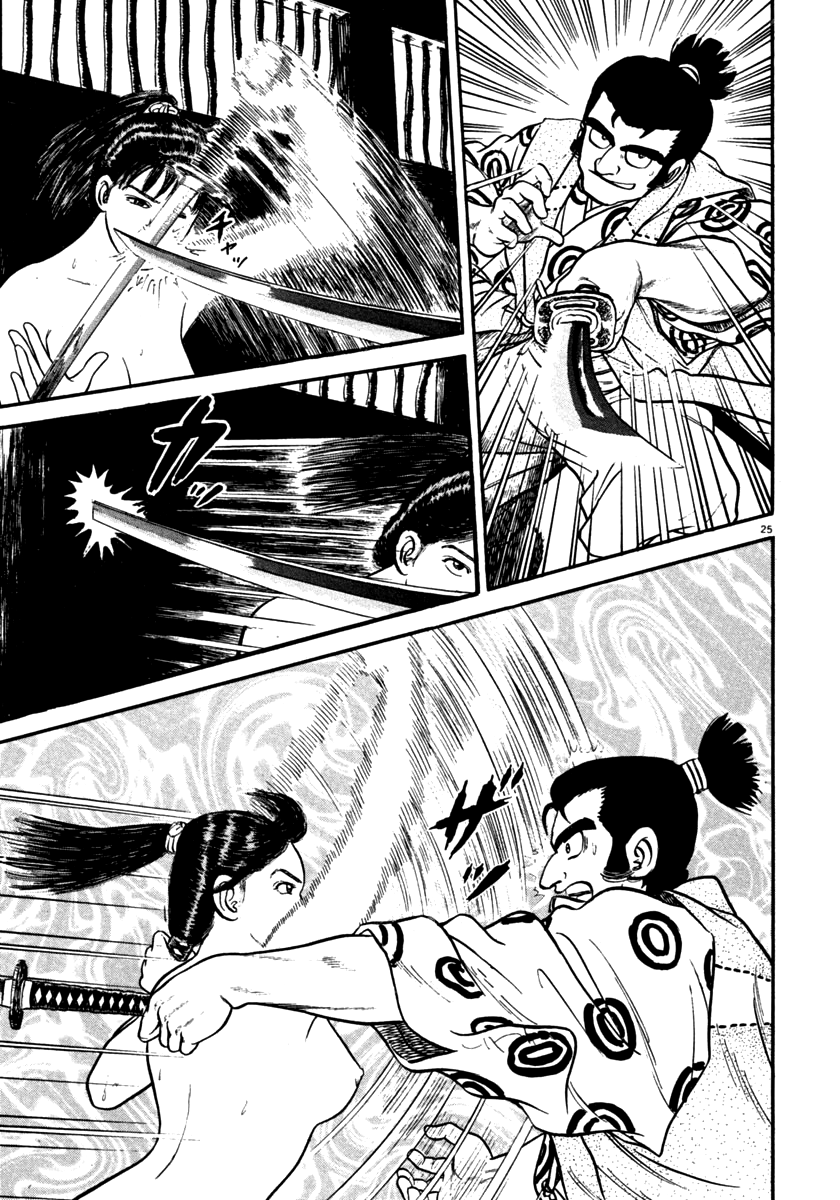
Politics are the background of Azumi’s fate. Cruel choices are constantly made in the name of the common good as she is tasked to ‘prune’ agitators and enemies of the central power. The fact that enemies have very different motivations (some are pure evil, some are really great people) sustains your interest through the story.
The question that constantly follows our hero’s path is ‘is it really right to kill so many people to avoid greater suffering?’. It’s nice to see that hesitation never leaves Azumi, although the manga’s answer to this question leans towards ‘yes’ (otherwise we would not have all those badass fights), and Azumi can be seen as a reactionary force that is preventing all tentative of societal change. Here, she murders samurais who turned bandits after the government confiscated their lands, there, she destroys the dreams of revenge of a man whose family was barbarically tortured by the Shogun.
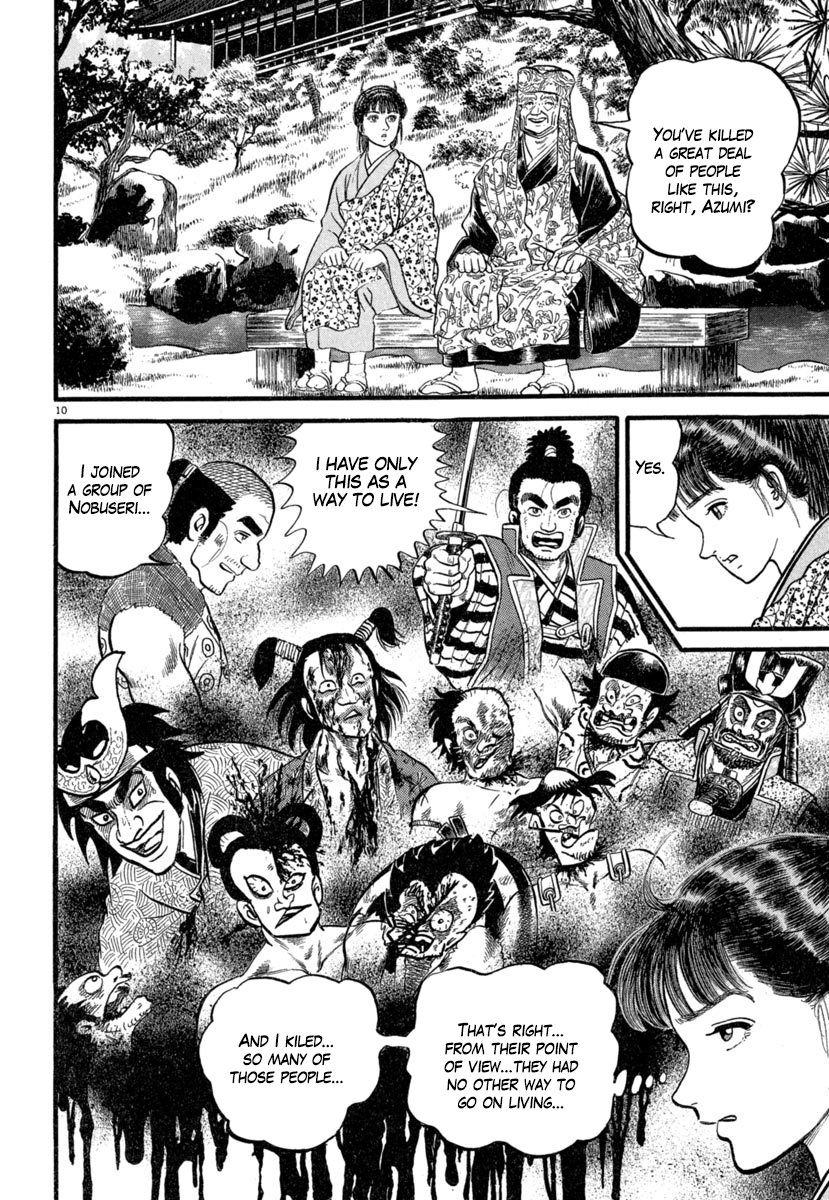
And, when people she cares about are killed by assassins (her peers) she often herself resorts to revenge, perpetuating the cycle of violence. Along the way, she needs to reflect on the hundreds of widows and orphans who wish to take revenge on her, as well as all the ambitions she has crushed. Quite some weight for a teenager raised in the woods.
In the end, the politics around our heroine are about fate, and those who fight to influence it.
FEMINISM: 5
On one side, you have this damsel who is an almost invincible killing machine, and it can be satisfying to see her slaughtering the hordes of brutes (a realistic majority of men) trying to kill, rape, or submit her. Her godly fighting skills and bodycount, though, make it hard to identify to her, she is just too exceptional.
She is also made inhuman in the sense that she is depicted as an almost religious figure (a Bodhisattva): she is prude, naive, has no self-interest and has love and compassion for everyone. It’s annoying to see this kind of Virgin Mary personality used on so many female characters and barely on any guy in popular culture. Meanwhile, for example, the male hero of Lone Wolf and Cub (a similar manga about a invincible assassin in feudal Japan) knows about the world, is dignified, lives for the rules of samurai and does not show much emotion.
Compare Azumi saintliness to her daily activity of cutting limbs, spraying blood and creating orphans and you can see that such a stretch makes her character even more unrealistic. So, this is not a manga you need to offer to a young girl if you want to boost her confidence and dreams.
Despite Azumi being an awesome warrior, we are still close to the trope of ‘chicks with guns are exciting’. The reader is often reminded of how Azumi is extremely gorgeous, and, when she gets (regularly) naked, it’s always a male gaze fest. Try to picture the male character of your favorite sword manga having fights frequently naked, with the framing exposing his whole body, to understand how annoying that gaze is. She has very soft hands (although she’s spent her life using weapons and training harshly), a fair white body (despite growing up in the forest and being outside all day), and everybody is subjugated by her sexy figure: shouldn’t be trained to be a killing machine since you are a baby give you a tough and buff body?
‘Chicks with guns are exciting’ is exactly that kind of contradiction: the contrast between violence and its sexy perpetrator is fascinating, even if it does not make sense. Too bad the author or editors cannot imagine the story could be more interesting if Azumi had a body that matched her tough life. And, do we need to mention this beautiful, frequently naked, body we are gazing at grows from (around) 11 to 16 year old along the story?
Maybe the best content concerns the secondary female characters. There’s quite a few that are trying to have some agency and dignity despite being severely constrained (or downright abused) by patriarchy. Azumi herself, while thinking about her life as a warrior, realizes that, without her strength, she would be at the mercy of men like any ordinary woman, and she cannot accept it.
Do you like unconventional identities? Here comes the worst content.
The first gender-ambiguous character is an handsome male enemy that dresses up as a woman, and.. he is a twisted, sadistic pervert who might have killed his own mother. Coincidence? No. This trope of the ‘effeminate male villain‘ is too common (hi Orochimaru from Naruto, Jafar or Scar from Disney, General Blue or Freezer from Dragon Ball) and enforces that men that deviate from the ‘correct’ masculinity are bad.
Later in the story, another transvestite girl is given a lot of development, but we get another trope of the depraved homosexual where a gay or trans character is shown as having an abnormal sexuality. We are also told that her sexuality is a trauma due the abuse she got during her training as a child. And the abuse was made by another homosexual! She accompanies Azumi and.. then gets one of the cruelest death among the many deaths of the manga. Her torturer is none other than another homosexual, this one being so depraved it seems he has lost all humanity. I leave it to you to decide if the cruelty was to illustrate the oppression of trans people or because the author thought it was especially ok to give that kind of end to a trans person.
Another major enemy is the machiavellian leader of a fanatic cult that comes with the full effeminate male villain pack. He is a scheming, sadistic, manipulating coward with too much make-up and mannerism. Is that not enough? He is also gay and can be seen lusting for his master to the point of insanity, wiling to kill even innocents to get into his good graces.
And the master himself is shown as depraved.. Ok we get it! The manga Azumi is telling us that non-heterosexual people exist, and, oh boy are they depicted as deviant! If it’s to be that insulting, maybe the author should not mention such characters at all.
CONCLUSION: 7
There’s not many occasions to find the violent, thrilling, and over-the-top adventures of a female fighter delivered with such quality. Azumi is a great read, if you manage to not be affected by the distressing (and violently homophobic) content, thanks to the help of the uplifting art.
Leave a Reply